Why Routine Maintenance Prevents Costly Future Collision Repair
The relationship between a well-maintained vehicle and road safety is often underestimated. Many drivers view oil changes, fluid flushes, and part inspections as mere suggestions or chores designed to keep the engine running smoothly. However, the reality is far more significant: a rigorous maintenance schedule is your primary defense against the mechanical failures that lead to catastrophic accidents. When a vehicle is neglected, it becomes unpredictable. A car that fails to stop in time, a tire that disintegrates at highway speeds, or a lighting system that fails during a rainstorm transforms a manageable driving situation into a dangerous emergency.
The financial implications are equally stark. While routine service costs a few hundred dollars a year, the price of major structural restoration following an accident can reach tens of thousands. By understanding how proactive care keeps your vehicle’s safety systems in peak condition, you can protect both your physical well-being and your bank account. This guide explores the deep-seated connections between regular upkeep and the prevention of major road incidents.
The Critical Link Between Stopping Power and Road Safety
Braking systems are arguably the most important safety feature of any vehicle. Over time, friction material wears down, and heat degrades the integrity of the hydraulic fluid. If you ignore the high-pitched squeak or the slight vibration in the pedal, you are actively increasing your risk of a forward collision. In an emergency, every inch matters. A vehicle with thinning pads might take an extra ten or twenty feet to come to a complete stop—a distance that often represents the difference between a close call and a totaled front end.
Regular car brake repair is not just about stopping the noise; it is about ensuring the calipers, rotors, and pads work in perfect harmony. Furthermore, sourcing these services through local auto repair services ensures that your vehicle is handled by technicians who understand the specific environmental stressors of your region, such as road salt that can corrode brake lines or extreme heat that can boil old brake fluid.
Key Action Items for Braking Health:
-
Check brake fluid levels monthly; if the fluid is dark or murky, it’s time for a flush.
-
Listen for “indicators”—the small metal tabs designed to scrape the rotor when pads are low.
-
Inspect rotors for “glazing” or blue spots, which indicate overheating and reduced friction.
Maintaining the Only Point of Contact with the Road
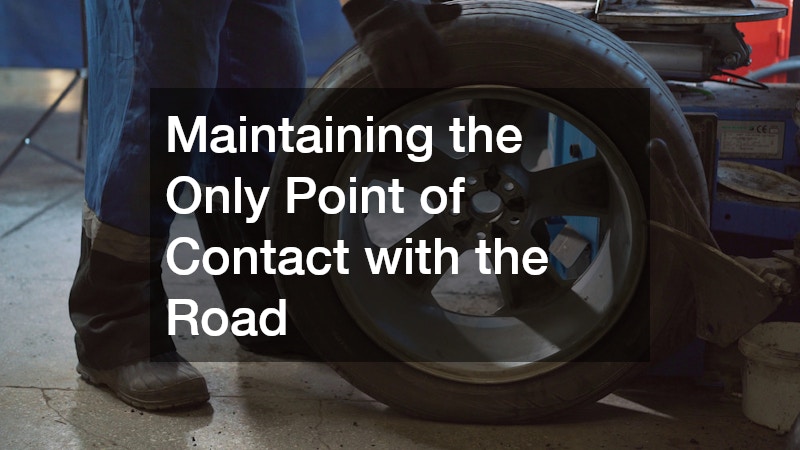
Your tires are the only part of your vehicle that actually touches the pavement. When tread depth reaches a certain minimum, the tire loses its ability to channel water away, leading to hydroplaning. Once a vehicle loses contact with the road, the driver is no longer in control, and a collision becomes almost inevitable. Beyond tread depth, internal damage from hitting potholes or curbs can lead to blowouts, which are especially dangerous at high speeds.
A quick tire repair for a small puncture can prevent the internal structure of the tire from oxidizing and eventually failing. When you bring your vehicle into a professional auto repair shop, technicians can identify uneven wear patterns that signal alignment or suspension issues. Correcting these early ensures that your car tracks straight and responds accurately to steering inputs, keeping you in your lane and away from oncoming traffic.
Signs Your Tires are Compromised:
-
The “Penny Test”: If you can see the top of Lincoln’s head, your tread is too thin.
-
Bulges or bubbles in the sidewall indicate internal belt failure.
-
Constant vibration in the steering wheel suggests an imbalance that stresses the suspension.
Structural Integrity and Heavy-Duty Protection
For those who drive trucks or utility vehicles, maintenance extends beyond the engine. The structural integrity of a vehicle is what protects the occupants during an impact. Corrosion is the silent enemy of this integrity. When the metal of a truck bed or frame is exposed to the elements and chemicals, it begins to weaken. In the event of an accident, a rusted frame may crumple in ways the engineers never intended, failing to absorb the energy of the impact.
Investing in a high-quality truck bed liner does more than prevent scratches; it seals the metal against moisture and oxygen, preventing the onset of structural rust. If a minor mishap does occur, seeking professional collision repair immediately is vital. Even a small dent can compromise the “crumple zones” of a vehicle. Addressing these issues ensures that the vehicle remains a safe cage for its passengers rather than a liability in a secondary accident.
Ways to Protect Vehicle Structure:
-
Wash the undercarriage regularly, especially during the winter months.
-
Use protective coatings on high-wear areas to prevent metal exposure.
-
Address deep scratches or stone chips on the bodywork before they turn into rust spots.
Vision and Security Systems as Accident Deterrents

Safety is as much about what you can see as it is about how the car performs. Driver fatigue and glare are leading causes of nighttime and sunset accidents. When sunlight hits a windshield at a certain angle, the resulting blindness can cause a driver to miss a braking signal from the car ahead. Similarly, extreme interior heat can cause plastic components to off-gas, creating a film on the inside of the glass that further obscures vision.
Professional auto tinting helps mitigate these risks by reducing glare and keeping the cabin temperature stable, which reduces driver irritability and exhaustion. Beyond vision, modern vehicle security is tied to safety. If you are stranded in a dangerous location because of a lost or broken fob, you are at risk. Prompt car key replacements ensure that you always have access to your vehicle and its safety features, preventing situations where a driver might be tempted to leave a car in an unsafe position on the side of a busy road.
Improving Environmental Safety:
-
Replace windshield wipers every six months to ensure clear vision during storms.
-
Keep the interior glass clean of the “fog” created by plastic conditioners and heat.
-
Ensure all exterior bulbs (brake lights, turn signals, and headlights) are functioning.
Engineering Reliability for High-Stress Performance
Heavy-duty vehicles and performance-tuned machines operate under higher pressures and temperatures than standard commuter cars. When you push a vehicle to its limits—whether through towing, hauling, or high-speed driving—the margin for error shrinks. A failure in the cooling system or a snapped belt in a high-performance engine can lead to a sudden loss of power steering or power brakes, leaving the driver struggling to maneuver a heavy machine.
Integrating high-quality truck performance parts ensures that the vehicle can handle the increased loads without catastrophic failure. Furthermore, having your vehicle inspected by experienced diesel engine mechanics is essential for those running heavy-duty rigs. These specialists can spot the subtle signs of “blow-by” or turbocharger wear that a generalist might miss. By keeping the heart of the vehicle healthy, you ensure that you always have the power and control necessary to navigate out of harm’s way.
Maximizing Performance Safety:
-
Monitor EGT (Exhaust Gas Temperature) gauges to prevent engine overheating.
-
Upgrade cooling systems if you frequently tow near the vehicle’s maximum capacity.
-
Use only high-grade synthetic lubricants designed for high-stress environments.
Daily Habits for Long-Term Vehicle Health
While professional service is the backbone of maintenance, the driver’s daily habits are the first line of defense. You don’t need a lift or a toolbox to perform a basic safety check. Developing a routine of looking at your vehicle before you get in can save you from a disaster ten miles down the road. This proactive stance changes your relationship with the machine from one of “using it until it breaks” to “maintaining it so it lasts.”
The Pre-Drive Walkaround:
-
Check for puddles under the car, which could indicate a leak in the brake or cooling system.
-
Look at the stance of the car; if one side is lower, a spring may be broken or a tire may be losing air.
-
Give each tire a quick visual check for low pressure or visible damage.
The Monthly Deep-Dive:
-
Check the oil level and color; it should be translucent, not pitch black or milky.
-
Test the battery; a weak battery can cause electronic stability control systems to malfunction.
-
Inspect all belts for cracks or fraying; a snapped serpentine belt kills the alternator and power steering instantly.
The Economics of Prevention
When people skip maintenance, they usually do so to save money. However, this is a classic example of being “penny-wise and pound-foolish.” The cost of a vehicle is not just the monthly payment and the gas; it is the total cost of ownership over its lifespan. A car that is regularly serviced will not only be safer, but it will also have a significantly higher resale value and a much lower frequency of “emergency” repairs.
Consider the cost of a cooling system flush versus the cost of a warped head gasket or a cracked engine block. Consider the cost of a wheel alignment versus the cost of replacing four prematurely worn tires. When you view maintenance as an investment in the vehicle’s longevity and your own safety, the math becomes very simple.
Financial Benefits of Regular Care:
-
Insurance Premiums: Avoiding accidents keeps your “claims-free” discounts intact.
-
Fuel Economy: Properly inflated tires and a clean intake system can save hundreds in fuel annually.
-
Resale Value: A fully documented service history is a massive selling point for future buyers.
The Digital Guard: Ensuring Electronic Stability and Sensor Accuracy
In the modern automotive landscape, mechanical components are increasingly governed by complex electronic brains. Features like Anti-lock Braking Systems (ABS), Electronic Stability Control (ESC), and Advanced Driver Assistance Systems (ADAS) rely on a network of sensors to prevent the vehicle from skidding or colliding with obstacles. If these sensors are obscured by grime or if the electrical system is weakened by an aging battery, the vehicle’s ability to protect you in a split-second crisis is severely compromised. Maintenance is no longer just about grease and gears; it is about digital calibration and electrical health.
When a vehicle’s computer receives faulty data due to a corroded connection or a misaligned sensor, it may apply the brakes unevenly or fail to engage traction control when you hit a patch of ice. This technical drift is often subtle, occurring over months of driving, but it culminates in a vehicle that feels “off” during high-stress maneuvers. Regular diagnostic “health checks” allow technicians to reset these systems and ensure that the software guiding your hardware is functioning exactly as the manufacturer intended.
Maintaining the Vehicle’s Electronic Integrity:
-
Clean the “Eyes”: Ensure that cameras and radar sensors—often located behind the rearview mirror or in the front grille—are free from dirt, ice, and wax buildup.
-
Battery Health: A battery nearing the end of its life can cause voltage drops that lead to “phantom” error codes in the safety modules. Replace batteries every 3–5 years, regardless of whether the car still starts.
-
Grounding Wires: Have your technician inspect grounding straps during oil changes; rust on these small wires can lead to erratic behavior in the car’s safety computers.
-
Software Updates: Just like your phone, your car occasionally requires firmware updates to improve the logic of its collision-avoidance systems.
By treating the vehicle as a unified system of both physical parts and digital intelligence, you create a dual layer of protection. This holistic approach ensures that when you turn the wheel or slam on the brakes, the response is instantaneous, accurate, and—most importantly—safe. Neglecting this digital side of maintenance can lead to a “mechanical surprise” where the car fails to intervene during a potential accident, making a trip to the body shop a mathematical certainty rather than a possibility.
A vehicle is a complex ecosystem of mechanical and electronic parts, all working together to move you through the world at high speeds. When even one small component of that ecosystem fails, the balance is upset, and the risk of a collision increases exponentially. Routine maintenance is not merely about preserving the engine; it is about ensuring that every safety system—from the brakes that stop you to the tires that grip the road and the lights that signal your intentions—is ready to perform in a split second.
By committing to a regular schedule of inspections and being proactive about small repairs, you effectively insulate yourself from the most common causes of vehicle accidents. The road is an unpredictable place, filled with variables you cannot control. However, the condition of your vehicle is a variable you can control. Prioritizing upkeep is the most effective way to ensure that when the unexpected happens, your car responds exactly as it was designed to, keeping you and your family safe.